

Wool vs Gore-Tex for Hunting: An Honest Comparison (From a Wool Maker)

We've been making wadmal wool hunting clothing since 1993. So yes — you'd expect us to say wool wins. We're not going to do that. Instead, here's the honest comparison we wish existed when we started.
Every few years, the hunting community relitigates this debate. Wool purists on one side, Gore-Tex converts on the other. Both sides make real points. Both sides also have blind spots.
After three decades of making wadmal wool garments — and reading hundreds of field reports from hunters in Alaska, Sweden, Texas, and everywhere in between — we've developed a clear view of this. Not a biased one. An honest one.
Here it is.
First: What Is Gore-Tex, and What Is Wadmal?
This matters before we compare them, because they're not actually the same category of thing.
Gore-Tex is a waterproof-breathable membrane — a thin laminate bonded to an outer fabric. Its job is to block external water while allowing water vapor (sweat) to escape. It does not insulate. It is a weather barrier, not a warming system.
Wadmal is a densely woven and felted wool fabric with roots in Scandinavian tradition going back to the Viking Age. It insulates, resists wind, sheds light rain, moves silently, and — critically — keeps you warm even when wet. The version we use at Micklagaard was developed in collaboration with the Swedish military and firefighting services. It is an outer fabric in its own right, not a membrane laminated to something else.
Comparing them directly is a bit like comparing a down sleeping bag to a rain cover. They overlap in some conditions, but they're built for different jobs. Understanding this distinction is the key to making the right choice for your hunt.
What Gore-Tex Does Well — Honestly
Let's start here. Because if we don't acknowledge where Gore-Tex genuinely excels, this stops being a comparison and becomes marketing copy.
Sustained heavy rain. In a prolonged downpour — four, six, eight continuous hours of serious rain while you're stationary — a Gore-Tex shell is hard to beat for keeping external moisture out. The membrane works as advertised in these conditions. This is its strongest scenario.
Low weight for the coverage. A Gore-Tex shell jacket is significantly lighter than a comparable wadmal jacket. For mountain hunters covering serious vertical gain where every gram is felt, that matters.
Lower entry price point. Quality wadmal hunting clothing is expensive. If you're new to hunting and not yet certain it's a long-term investment, a cheaper Gore-Tex alternative is a reasonable starting point.
That's a fair accounting. Now let's talk about what the membrane technology doesn't tell you.
Where Wool Wins — And Why It Matters More Than You Think
1. Silence in the field
This is the property that surprises hunters most — until they've experienced it themselves.
Gore-Tex is noisy. The laminate structure creates a soft but consistent swishing sound with every movement: against branches, against your torso when you raise your arm, even when walking on a calm day. In still hunting or stalking scenarios, that sound travels. Game hears it before you see them.
Wadmal is completely silent. The dense, felted structure absorbs movement noise. It doesn't swish. It doesn't rustle against brush. When you raise your rifle, there is no sound. This is not a minor advantage — it's the reason serious Scandinavian hunters have used wool in boreal forests for centuries. In environments where a single unnatural sound sends elk crashing into the treeline, the difference between a noisy shell and a silent wool jacket is the difference between a filled tag and an empty one.
2. Warmth when wet — the property Gore-Tex doesn't have
Gore-Tex stops water from getting in from outside. But it provides zero insulation. When you're wet from the inside — from sweat during exertion, or from moisture that eventually penetrates over time — a Gore-Tex shell offers nothing in terms of warmth. You have a wet shell and whatever insulation layer is underneath.
Wool insulates even when wet. The fiber structure of wool traps air even when saturated, generating warmth through a natural thermochemical process. This is why wool garments keep you cold but not dangerously cold when they get wet — your core temperature stays protected. This property has kept sailors, soldiers, and hunters alive in conditions where synthetic alternatives would have led to hypothermia.
One of our customers, Alexander Bell, wore his Abisko anorak layered over wool in Alaska at -47°F windchill during moderate exercise and reported staying comfortable throughout. That's not a marketing claim — it's a verified purchase review on our site, written by someone with no interest in promoting us.
3. Durability that outlasts the hunter
Gore-Tex membranes delaminate over time. The DWR (durable water repellent) coating that makes the outer fabric shed water washes out after repeated use and requires periodic reapplication. Most Gore-Tex garments perform at their best for 3–5 years with regular use, and show measurable performance degradation after that regardless of care.
Wadmal does not degrade this way. It has no membrane to delaminate, no coating to wash out. Our customers regularly report 10, 15, and 20+ years of hard field use from the same garment. Several describe their Micklagaard pieces as heirlooms they intend to pass down.
One customer from Fairbanks, Alaska summed it up simply in his review: "At any price, it will outlive me." This reflects not sentiment but reality — wadmal was designed to outlast the abuse of military and firefighting use. Hunting wear is comparatively gentle.
4. Fire safety — the non-negotiable
Never wear Gore-Tex near an open fire. This is not a recommendation — it's a safety rule.
Synthetic membranes melt and fuse to skin when exposed to flame or significant heat. A spark from a campfire, an ember from a wood stove, a moment's inattention — any of these can cause serious burns through a Gore-Tex layer. Wool is naturally fire-retardant. It chars and self-extinguishes rather than melting. For any hunt that involves camp life — which is most multi-day hunts — wool is the only sensible choice for your outer layer.
5. Natural scent control
Wool has inherent antibacterial properties that inhibit the odor-causing bacteria that colonize synthetic fabrics during extended wear. After a week in the field, a wool garment smells dramatically better than a comparable synthetic. For hunting game with acute olfactory senses — whitetail deer, elk, moose — this is a meaningful, real-world advantage that no Gore-Tex product can replicate.
The Honest Framework: Match the Fabric to the Hunt
Rather than declaring a winner, here's how we'd actually make the decision:
Still hunting or stalking in boreal forest or dense woodland
Silence is everything. Temperature is sub-zero. You're moving slowly and stopping for long periods. Wool wins clearly. Wadmal gives you insulation, silence, and durability that no Gore-Tex system matches here.
Mountain hunting with long approach hikes
You're generating high body heat on the ascent, then stopping in wind and cold at altitude — with possible rain. Layering is the answer. A merino base, wool mid-layer, and a lightweight Gore-Tex shell for the descent is a legitimate hybrid system. Neither material alone is optimal here.
Driven hunting — standing in a seat for hours
You're stationary in cold and possibly wet conditions. You need insulation, not a weather barrier. Wool wins. A heavy wadmal jacket and wool trousers will keep you warmer for longer than any Gore-Tex system in this scenario.
Waterfowl in sustained heavy rain
This is Gore-Tex's strongest scenario. Continuous rain, wet conditions, moderate movement throughout. A Gore-Tex wader or shell makes sense here — possibly with wool underneath for warmth.
Multi-day camp hunting or bushcraft
Open fires. Extended wear. Cold nights. Variable conditions. Wool wins. Fire safety alone makes this a clear decision. The odor resistance and warmth-when-wet properties make it even clearer.
What Hunters in the Field Actually Report
We don't have a test lab. We have 388+ reviews from people who hunt in real conditions and have no incentive to be generous to us. Here's what the extremes look like:
Kebne jacket, North America: "Exceptionally well made. The Wadmal material is soft to the touch but you can tell it will wear well. You're wearing camouflage without looking like you're wearing camouflage. The leather trim hints to the hand-made quality without flash or fanfare."
Abisko anorak, Alaska (-47°F windchill): Customer wore the anorak layered over wool during moderate physical activity at extreme cold. Reported staying warm and comfortable. Notes it looks like new after years of hard use. "At any price, it will outlive me."
History Channel's Alone, Arctic conditions: Callie Russell, who participated in both Season 7 and Alone: Frozen, wore Micklagaard wool garments through 89 days of survival in Arctic conditions. She described them as a "game changer" for extreme outdoor living — not comfort camping, not day hiking. Survival.
Hamra Professional trousers, Texas: "The quality is the best you can buy. Very well made and good fit. Make sure to use their sizing chart." — Ronald Hughes, Fairfield TX. This is a customer in mild winters, not the Arctic, reporting the same quality experience.
The pattern is consistent across climate zones, hunting types, and continents: hunters who buy once don't come back because they don't need to replace anything.
Our Recommendation
If you hunt in temperate to cold conditions — forests, mountain terrain, boreal environments, Scandinavian or North American wilderness — buy wool as your primary outer layer. Specifically wadmal if you can. The combination of silence, insulation, fire safety, durability, and scent control has no synthetic equivalent for this use case.
If you regularly hunt in sustained heavy rain or need a packable emergency layer for alpine conditions, add a lightweight Gore-Tex shell on top of your wool. They're not mutually exclusive — they solve different problems and can work together.
What we'd steer you away from: Gore-Tex as your sole layer in serious cold. It was engineered as a weather barrier, not a warming system. Treating it as your primary cold-weather clothing is the most common mistake we see from hunters transitioning to outdoor clothing from everyday wear.
Frequently Asked Questions
Is wool warmer than Gore-Tex for hunting?
Yes — but this is comparing two different things. Wool insulates; Gore-Tex repels external water. Wool keeps you warm. Gore-Tex keeps you dry on the outside. For most cold-weather hunting scenarios, warmth matters more than waterproofing, which is why serious hunters have relied on wool for centuries.
Does wool stay warm when wet?
Yes. Wool fiber retains its insulating properties even when saturated because its structure continues to trap air. This is one of wool's most critical properties for hunting. Gore-Tex provides no insulation whatsoever — if moisture penetrates or sweat accumulates inside, you have a wet shell with no warming capability. Wet wool is heavy and cool, but it does not put you in danger. A wet Gore-Tex shell alone does.
What is wadmal, and how is it different from regular wool?
Wadmal is a traditional Scandinavian fabric made from densely woven and felted wool. Unlike merino or standard boiled wool, wadmal is extremely thick, wind-resistant, puncture-resistant, and naturally water-repellent. The version we use at Micklagaard was developed for the Swedish military and firefighting services — a modern interpretation of a fabric with roots in the Viking Age, built to military durability specifications. It is heavier than typical outdoor wool, and significantly more durable.
Is wadmal better than merino wool for hunting?
They serve different purposes. Merino is ideal as a base layer — lightweight, soft against skin, excellent moisture-wicking. Wadmal is designed for outerwear — wind resistance, silence, puncture resistance, and extreme durability. The optimal system pairs merino underneath with wadmal on top. They are complementary, not competing.
How long does wadmal hunting clothing last?
With proper care, decades. Our customers regularly report 10 to 20+ years of hard field use from the same garment. Gore-Tex membranes typically degrade noticeably within 3–7 years of regular use. The long-term cost of quality wadmal is almost always lower than repeatedly replacing Gore-Tex gear over the same period — and that's before accounting for the performance advantages.
Can wool hunting clothing be worn in the rain?
Yes. Wadmal sheds light to moderate rain effectively — its dense structure resists saturation for considerably longer than standard wool. In prolonged heavy rain (several continuous hours), adding a Gore-Tex shell over your wadmal jacket is the optimal combination. For typical Scandinavian and North American hunting conditions, wadmal alone handles the weather well.
The Micklagaard Pieces Hunters Reach for Most
If you're ready to try wadmal for your next season:
Kebne Hunting Jacket — Our most versatile hunting jacket. Heavy wadmal construction, adjustable fit, designed for sub-zero conditions. Worn by hunters from Alaska to Texas. Described repeatedly as "the last jacket you'll ever buy."
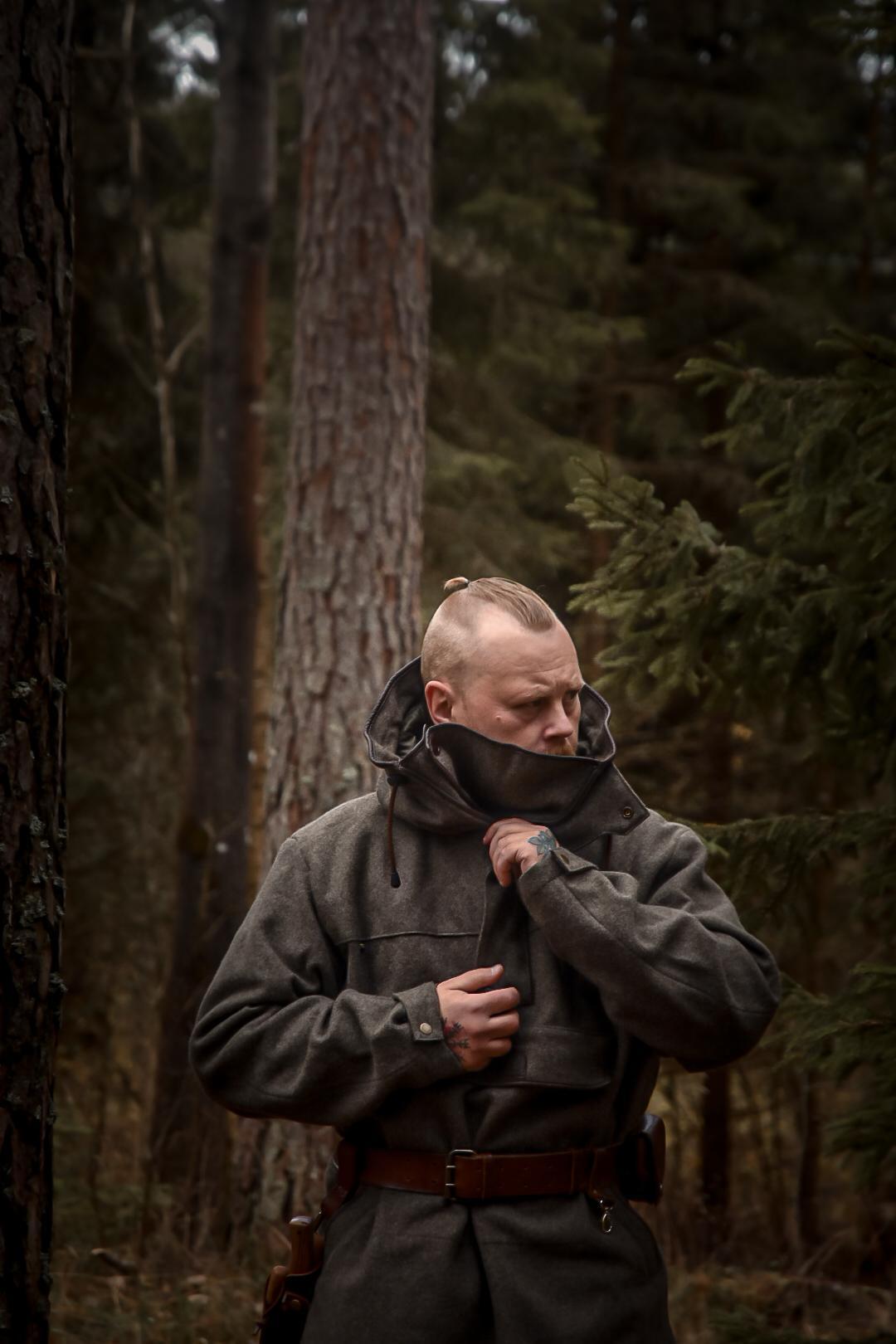
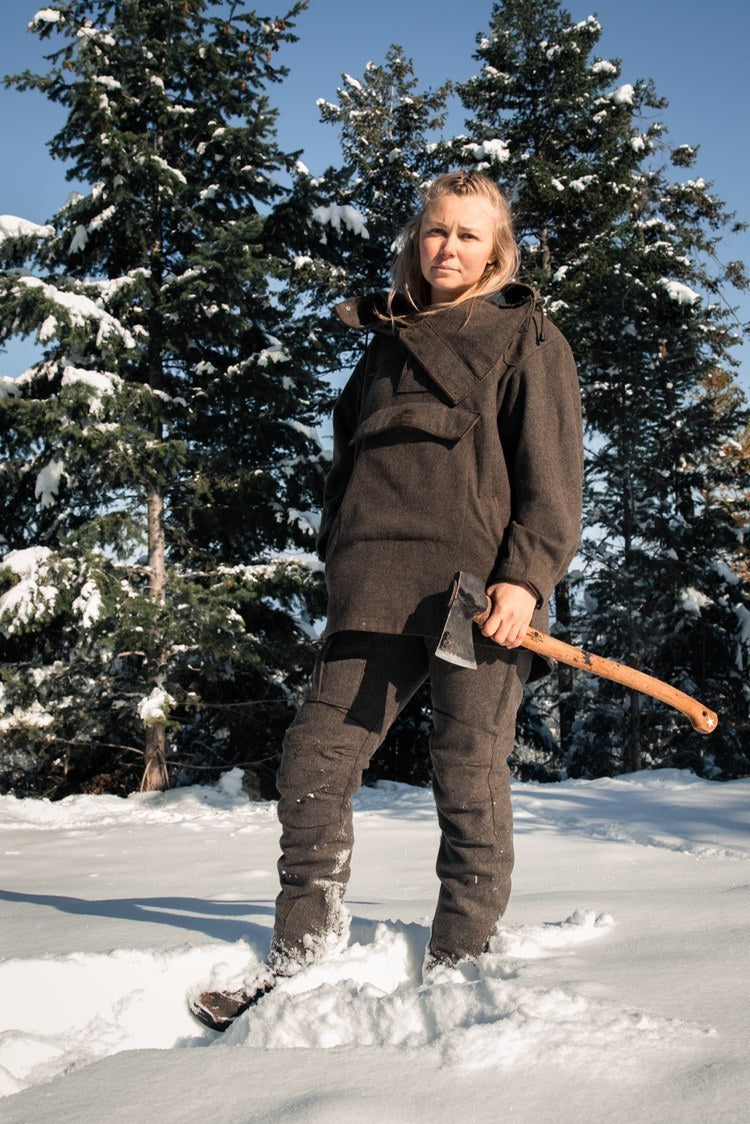
Anorak Abisko — The classic pull-over hunting anorak. Significantly lighter than the Kebne, exceptionally quiet in forest environments. Our bestselling piece for still hunting and stalking. 62 reviews, field-tested in Arctic conditions.
Hamra Professional Trousers — Full wadmal hunting trousers with reinforced knees and seat. Silent, wind-resistant, durable enough to be described as a "family heirloom" by multiple customers independently. Pairs with any jacket in our range.
Cape Ullen — A wadmal cape designed for driven hunting and camp use. Wraps around the shoulders and torso, perfect for hours in a hunting seat or around a fire. Fire-safe by nature. 15 reviews.
All Micklagaard garments are handmade

Leave a comment